Learn from ancient narratives and how myth shapes the values of people living today.
What is mythology?
Mythology is a collection of myths and narratives that influence how a reader perceives the world they live in. Through story and narrative a population learns values and behaviors that shape their very existence. Mythology tries to answer many fundamental questions like what it means to be human or where the world originated from. Mythology can be found across cultures as there is many ways to answer the unanswerable. Each culture gives their own insight on Humanity’s traits and characteristics. Most myths across cultures share universal themes and display an array of similar features and archetypal characters. Mythical figures go hand in hand with the psychic experience, giving us an understanding of these archetypes can give a reader a deeper insight at what it means to be human.
Elements of Myth
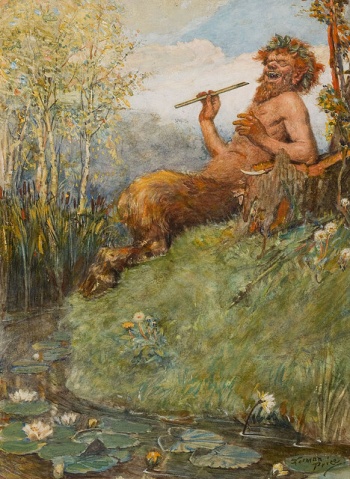
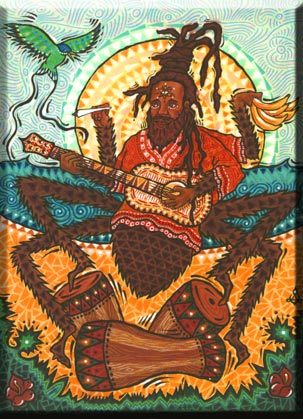
painting by Paul Downie

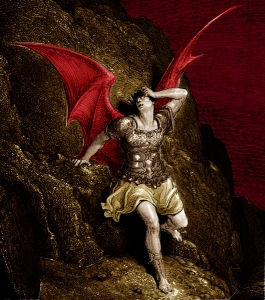
by Paul Gustave Doré
Most myths tell the stories of ancient Gods and Goddess that created and roamed the world. Myths are the telling of their wondering on earth that lead to the diversity of life and customs of humans. These myths talk about a god’s sacred place that was once inhabited, and descriptions of a animal embodying a god can be seen across all cultures.
The trickster archetype
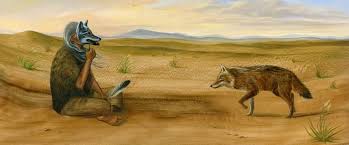
The trickster is often found in various shapes and sizes. In Native American Mythology the trickster takes the shape of a coyote, a raven, and sometimes a hare. In Norse mythology there is Loki the god of mischief. In Greek mythology the trickster is embodied in Hermes, the messenger of the gods. The trickster archetype can be found across cultures and often brings myth narratives to life by reflecting humanity’s hopes and aspirations.
The trickster is an embodiment of ambiguities, a character that cannot be placed into a single category without spilling into another.
“The Trickster does not suffer categorization lightly. He does not submit to the rules of his own society and will hardly sit still long enough for us to paint a clear picture of him, much less nail him down.” (252).
Myth & Knowing: An Introduction to World Mythology by Scott Leonard and Michael McClure
The trickster is a character to keep others on their feet and is always looking out for number one, i.e. himself. The trickster is the type of character to try to get the biggest reward by doing the least amount of work he is human impulse. The trickster is a character who can change into many forms, in some cases he can shapeshift into different animals or other characters.
Traits of the Trickster
The trickster is characterized as a wise fool, who is always cheated in one way or another. The trickster loves cunning jokes and pranks, always lurking to find his next victim, however this sometimes leads to him being exposed to all sorts of torture from vengeful victims. The tricksters shape shifting ability gives to his dual nature, allowing him to be half divine and half animal. This dual nature is what sets up the trickster to morph into the savior, giving him the ability to accomplish what seems to be unobtainable by those around him, though not by sheer witts but by his stupidity. The trickster is often clumsy and lacks any sort of instinct, it is these very flaws that make him a human, who is curious and eager to learn. Nonetheless, it is this very unconsciousness that characterizes the trickster. In fact, he is so unconscious that his mind and body are detached from one another,
“Sex is optional despite its phallic qualities: he can turn into a women and bear children”
Four Archetypes, Carl Jung
This also gives the trickster the role as a creator.
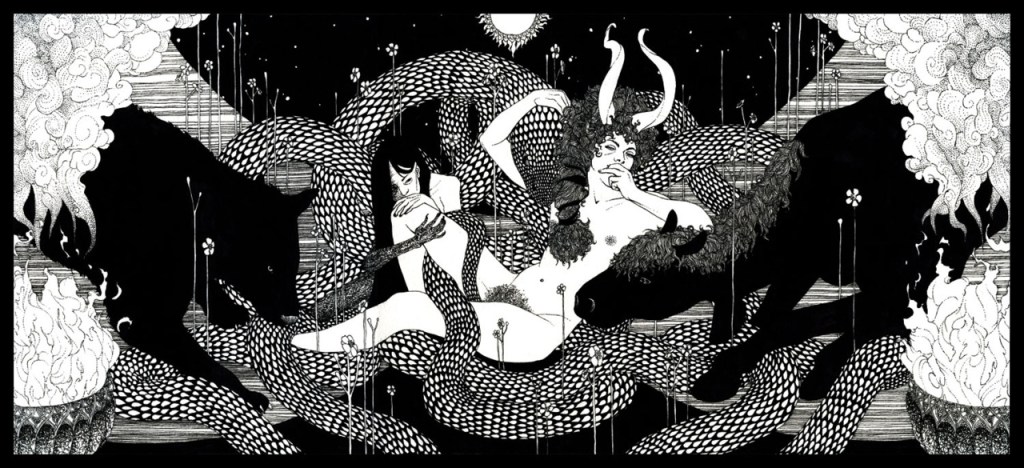
The trickster has been present since the beginning of time and he lives within shamanism, ancient healing traditions, and the universal collective spiritual wisdom. It is a way to build a stronger connection to nature and the cosmos. A Shaman is the medicine man and the leader in spiritual ceremonies. However his methods can be filled with pain and agony that can lead to psychic injuries. This duality gives the Shaman, the wounded wonder, the ability to heal, paving the road to become the savior. As the savior the trickster becomes a bestial divine being by being an embodiment of God, man, and animal; making him at once superhuman and subhuman.
The tricksters unpredictable behavior often leads to self-imposed suffering and destruction. This chaos coexist with the transformation into the savior that humanizes the trickster, and turning the meaningless into something meaningful. This traces back to the psychologem, the way one’s identity presents itself, that traces to the collective unconscious. The trickster is a representation of the animal brain, in search for meaning. The lizard brain is stubborn and lives in the past, longing for the Golden Age. As a thoughtful observer the trickster makes the animal brain self-reflect, on the earlier stages of consciousness, a representation of the counter-techniques of the unconscious mind.
Carl Jung refers to the trickster, as the Shadow, the trickster is inferior and childish, and points out the flaws of the consciousness. This is personified in the carnival costumes, residue left by the shadow, demonstrating that this figure must come from a spiritual collective figure, that is a personified object of personal responsibility. This allows for self-reflection to manifest by detaching oneself and objectifying the past self, it is only through the repetition of this process that one will be able to look past how one felt in an ungraceful moment that was clouded by outside negative attitudes. The trickster confronts those who are living in the past, by giving them a reality check.
Below find a presentation about the trickster and how he can be incorporated into a lesson plan.


great. Keep going
LikeLike